Bounce House Rentals Spokane WA
I have set up inflatables on lawns, church parking lots, school fields, and one very sloped backyard in the South Hill neighborhood that nearly beat me. After enough Saturdays doing this, I can tell you that renting a bounce house in Spokane is simple if you plan for about five things, and stressful if you ignore them. This guide covers what I would check before you book anything.
Start with the space, not the theme
Most people pick a bounce house by the cartoon character on the front. I pick it by the tape measure. A standard 13 by 13 foot unit needs roughly 17 by 17 feet of clear ground once you add room for the blower and a walkway. Larger combo units with slides run 15 by 20 feet or more, and they need 10 feet of clearance overhead, which rules out spots under mature pines or low power lines.
Walk the yard with a tape before you call anyone. Measure the flattest area, then look up. I have turned around at a driveway because a single branch hung at eight feet. If the grass is your only option, check for sprinkler heads. Stakes driven through a line will flood the yard and ruin your afternoon.
Know the Spokane weather window
Our rental season runs roughly May through September, and the calendar fills quickly in June when school lets out. Wind is the real limit, not rain. Most manufacturers say to deflate a unit when sustained wind reaches 15 to 20 miles per hour. Spokane afternoons can pick up fast, especially in open areas on the north side and out toward Cheney.
Book a morning slot if you can. Winds are usually calmer before noon, and kids are less cranky before the afternoon heat. In July and August we regularly see highs in the 90s, so a unit in full sun gets uncomfortably hot on the vinyl. Shade, or a water unit, solves that. I have also learned to ask any company about their weather policy before paying a deposit, because some refund fully for wind and some do not.

Choose the right type of inflatable
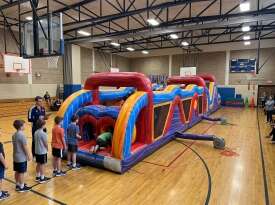
A basic bounce house suits toddlers through about age seven. It is the cheapest option and the easiest to place. A combo unit adds a small slide and a climbing wall, and it holds attention longer, which matters at parties that run three hours. Obstacle courses work better for ages eight and up, and for school events where you want a line of kids moving through rather than twelve of them piled in one room.
Water slides are the crowd favorite in July. They need a hose connection and a drain path, so think about where thousands of gallons will go. I once watched a slide empty straight toward a neighbor's garage door. Aim the runoff at the lawn, away from foundations and driveways.
Understand capacity and age mixing
Every unit has a posted capacity, usually somewhere between 6 and 12 children for a standard house. That number assumes similar sizes. A seven-year-old and a toddler in the same unit is how scraped knees happen. I tell hosts to split sessions by age: little ones for the first 30 minutes, bigger kids after. It takes one adult with a timer.
Assign one adult to supervise the inflatable at all times. Not "keep an eye out" while chatting, but standing at the entrance. Shoes off, no glasses, no sharp items in pockets, and no flips. Those four rules prevent most injuries I have seen.
Compare rental companies on the details that matter
Price is the least useful way to compare. A $120 rental that arrives late and wet is worse than a $170 one that shows up on time with a clean unit. Here is what I ask:
- Is setup and takedown included, or do I do it myself?
- Is the rental all day or a fixed four-hour block?
- Are the units cleaned and inspected between events?
- Does the company carry liability insurance and can they send proof?
- What happens if weather cancels the event?
Delivery fees vary by distance, so a company that serves Spokane Valley, Liberty Lake, and the north side may charge differently than one that only covers the core city. If you are searching for bounce house rentals near me, look for a page that lists the actual service area, the unit types, and how booking works, rather than a generic gallery with no prices or policies.
Check permits and venue rules
If your party is in a backyard, you usually need nothing beyond your own good judgment. Public parks are different. City of Spokane parks may require a reservation for the space, and some restrict stakes or generators. Church lots and school grounds often need written permission, and they sometimes ask for a certificate of insurance naming them as an additional insured. Ask the rental company early, because that paperwork can take a few days.
Homeowners associations are another surprise. A few neighborhoods limit event equipment in front yards or driveways. A short message to the board costs nothing and saves an argument.
Plan power, water, and setup access
Every inflatable needs a continuous blower, and that blower needs a standard 110 volt outlet within about 50 feet, or a heavy-duty extension cord rated for outdoor use. A shared circuit with a freezer or a space heater trips breakers. I ask hosts to confirm which outlet they will use and what else is on it.
Access matters too. Units weigh between 150 and 400 pounds rolled up, and crews carry them through gates and side yards. If your gate is narrower than 36 inches, tell the company. Some units can be split into smaller loads, but that must be planned. Also clear the ground of rocks, dog waste, and sticks before the crew arrives, because a puncture or a mess slows everything down.
Budget realistically and book early
For Spokane, a basic bounce house usually falls in the $100 to $200 range for a day, combo units and obstacle courses run higher, and water slides often cost the most. Expect delivery fees and possibly a small damage waiver. Tipping the crew is optional but appreciated when they set up in rough conditions.
Book three to four weeks ahead for summer weekends, and six weeks for graduation season or holiday dates. Confirm the details two days before: arrival window, outlet location, and who will meet the crew. A short text the night before has saved me from more mishaps than any other habit.
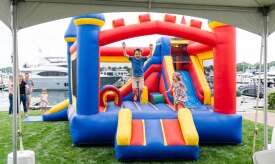
The best rentals feel boring to the host. The unit arrives, gets anchored, passes a quick safety check, and the kids spend the afternoon jumping. Spend your effort on the measurements, the weather policy, and the supervision plan, and the party takes care of itself.
Comments
Post a Comment